Leadership Team Development.
A leadership workshop for a senior team treats that team as a system rather than as a set of individually capable people. Future.Pro designs and facilitates them in Singapore and across Asia for C-suite and executive teams, in formats from a half day to a multi-day immersion, built around the relationships between leaders rather than the competencies within them. The Four Identities become the team’s common language. It is also where sales leadership coaching sits — the question there is how the team is led, not how it sells.
01 Who it is for
- C-suite and executive teams that operate well individually and slowly together — where the constraint sits between functions rather than inside them.
- Newly formed or newly merged leadership teams, where the first half-day goes on trust before any real work is possible.
- Sales leadership teams carrying a number, where the question is how the team leads rather than how it sells.
- Senior teams heading into a planning cycle, a restructure, or a year that will not resemble the last one.
02 What happens in the room
-
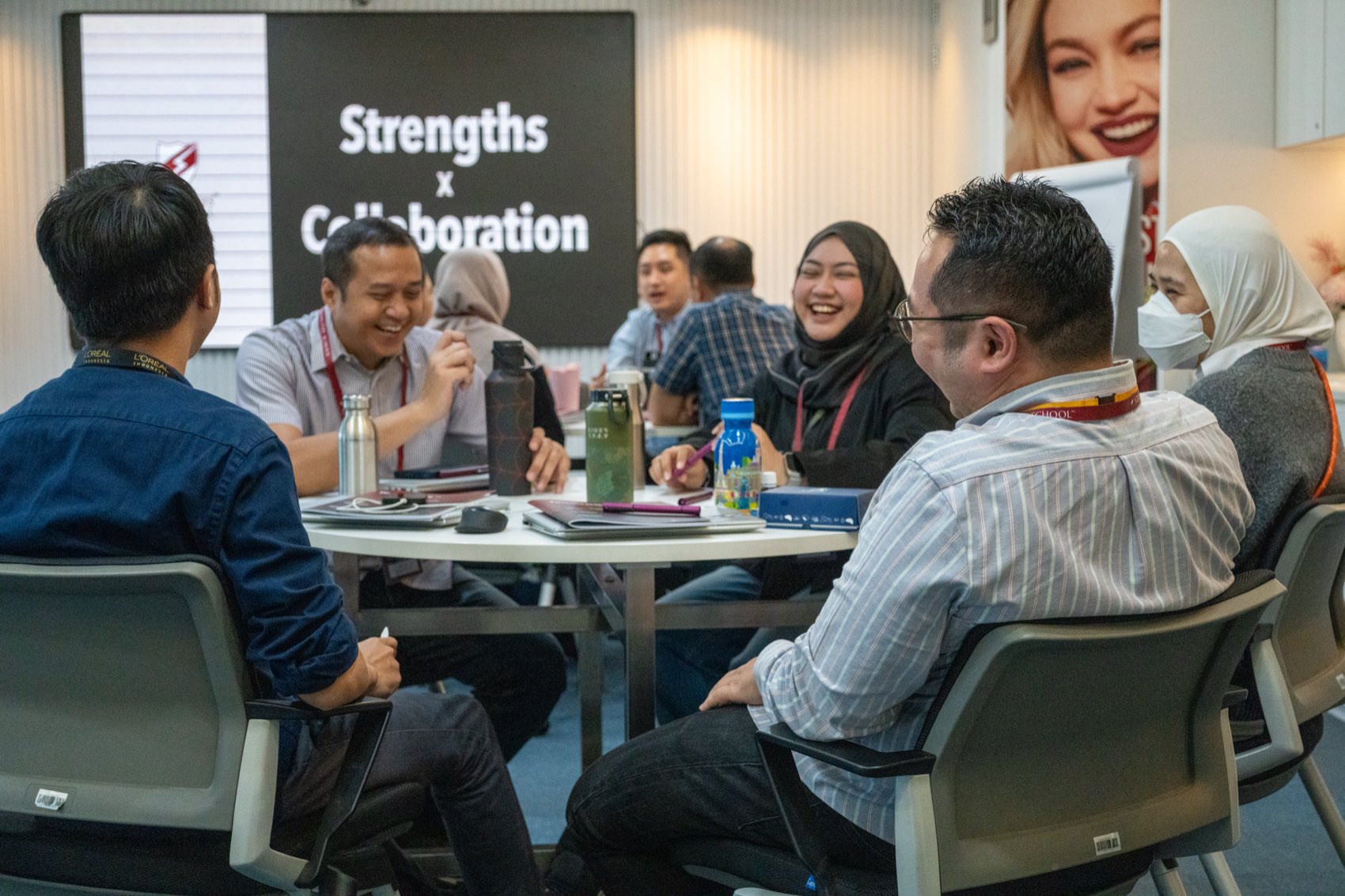
A leadership team is more than the sum of individuals — it is a system. When a C-suite or executive team operates from shared language, aligned conviction and genuine collaboration, transformation accelerates. Through immersive experiences, often multi-day, we build leadership teams that think together, focusing on the relationships between leaders rather than only the competencies within them.
-
Nothing is designed before the discovery conversation. We want to know what decision the group has been circling, who in the room disagrees about it, and what happened the last time they tried. The agenda is built from that, which is why two engagements for two clients rarely look alike.
-
A recurring exercise separates real limits from assumed ones. Groups sort statements like "this needs to come from management" and "we tried this before and it did not work" into constraints that are written down — law, policy, guidelines — and constraints that only feel fixed because everyone believes them. Most lists come back with one genuine limit and five assumptions, which changes the conversation for the rest of the engagement.
-
For sales leadership teams the same frame is applied to the number: which parts of the pipeline are gravity, which are actionable, and where the team has been spending effort on the wrong column. The work is about how a sales team is led, not about sales methodology — we are not a sales training company and do not pretend to be.
-
A good part of the time goes on the Collaborator identity, because the honest data about why senior teams stall points there: more than three hours a week are lost to poor collaboration, and 61 per cent of employees say they would leave a job over it. Influencing without authority, creating urgency in people who do not report to you, and giving feedback that actually moves something.
03 What changes afterwards
The outcome is a leadership team that moves with clarity, coherence and confidence — and that has one language for how each of its members thinks, which is the difference between a disagreement about the work and a disagreement about each other.
Teams describe the change as fewer escalations and shorter arguments about whose remit something is. What compounds the investment is what happens after the room empties, so a review is scheduled before anyone leaves.
04 Proof
"Your inspiring and dynamic coaching really helped make our day such a strong team-building experience — so rewarding and uplifting! These two days left us with a clear and ambitious vision for 2026, powered by our superpowers and an engaging team manifesto."
05 Questions
How is this different from a leadership offsite?
An offsite is a day away from the desk built around a decision the team needs to reach; this is development work on the team itself, usually across more than one session. The two overlap and often run together — many leadership teams start with an offsite and continue into this. If you want the day, that is Offsites & Retreats.
Do you do sales leadership coaching?
Yes, as part of this work rather than as a separate product. Leading a sales team is a leadership problem before it is a methodology one, so we coach sales leadership teams on how the team is led — where its effort is going, how it makes decisions, how its leaders influence people who do not report to them. We do not train sales methodology, and we will say so early rather than take the brief and improvise.
Does the whole leadership team have to attend?
Yes. The work is about the relationships between the people in the team, so a missing member is a missing part of the system — and the absent person becomes the one the room cannot speak candidly about. If someone genuinely cannot make it, we would rather move the date than run it short.
Ready
to begin?
Every engagement starts with a conversation. No pitches. No proposals. Just a direct dialogue about what you want to design.