Retail Leadership.
This is leadership development for people running luxury retail teams — boutique floor to regional office. It works on the part of the job that is specific to the sector: leading through constraints you do not set, when the brand owns the pricing and the assortment, footfall is outside your control and the client expectation is absolute anyway. Future.Pro has run this with teams at Chanel, Porsche, Birkenstock, Balenciaga, Van Cleef & Arpels and Grand Seiko, in Singapore and across Asia, in formats from ninety minutes to a full day.
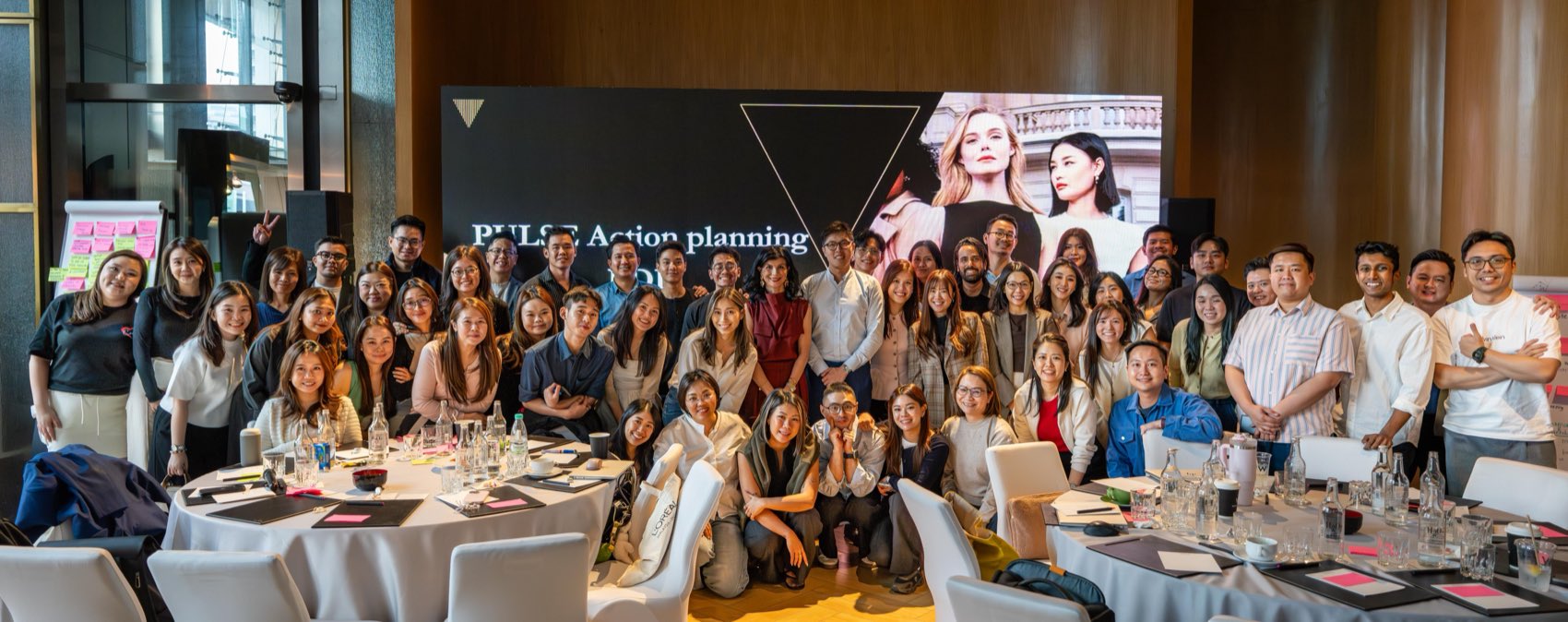
01 Who it is for
- Boutique and store managers moving from running a floor to leading the people on it.
- Regional and country teams carrying targets across markets with very different conditions.
- Retail and distribution leaders in houses where the brand sets pricing, product and calendar centrally.
- Teams that know the product deeply and still struggle to connect with high-value clients.
02 What happens in the room
- Formats
- 90 minutes · half day · full day
- Group size
- 5 to 150
- Investment
- From SGD 8,000
- Sector
- Luxury retail and distribution
- Delivered by
- The co-founders
-
The scenarios are the ones the sector actually recognises. Luxury consumer spending across South East Asia is under pressure from global uncertainty. Mall foot traffic has not returned to what it was. Brand partners set the pricing and the assortment, so the lineup is not yours to change. Groups sort these into what can be influenced and what cannot — and then work only on the first list.
-
That sorting matters more in luxury than in most sectors, because so much of the operating environment is genuinely fixed. A team that spends its energy resenting centrally-set pricing has less left for the thing that is entirely theirs: whether their people connect with a high-value client, and whether a floor team behaves like it owns the outcome or waits to be told.
-
The Founder Mindset pillars are applied directly to the retail floor. Extreme Ownership is the manager who sees a gap in the client journey and closes it without escalating. Will to Win is refusing to let a standard slip in a quiet month. Enterprise Mind is a boutique thinking about the region’s numbers rather than only its own.
-
Longer formats add the team’s own working styles, because luxury retail teams are often small, culturally mixed and working long hours in close proximity — where friction is expensive and usually comes from misreading a colleague rather than from disagreement about the work.
03 What changes afterwards
The change most often reported is a shift from passivity to action: teams that were waiting for direction from the brand or the region starting to decide what is theirs to solve locally.
Managers describe fewer escalations of things they could have handled, more consistency in how the floor behaves when nobody senior is watching, and language about accountability that came from the team rather than from a policy.
04 Proof
"Great and insightful session! It was very useful to discover and discuss about strengths and talent within the team in order to adapt the communication and collaboration accordingly. Brian was fantastic in leading the whole session in a professional and relaxed way."
05 Questions
Do you understand luxury retail specifically, or is this generic leadership training?
Specifically. Sessions have run with teams at Chanel, Porsche, Birkenstock, Balenciaga, Van Cleef & Arpels, Grand Seiko and LVMH and Richemont maisons, and the scenarios used in the room are drawn from that work rather than from a generic case library. Clients consistently mention that we understand both the local culture and their specific corporate culture, which in this sector are rarely the same thing.
What does a retail leadership programme actually cover?
Leading a retail team rather than running a shop floor: how a manager sets the standard for a team that is on show all day, how a decision made at headquarters is carried into a store without it sounding like an instruction, and how someone promoted from the floor learns to lead the people they used to work beside. The commercial detail is yours; the leadership is what we bring.
Can you run this for boutique staff as well as managers?
Yes, and the mix often works well. The material is about how a person operates rather than what authority they hold, so a floor team and its managers can do it together — which also means the language survives afterwards, because everyone was in the room when it was agreed. Very large groups run as ninety-minute formats; deeper work needs a half day.
Our brand sets everything centrally. What is actually left for us to change?
More than most teams assume, and separating the two is the first exercise. Pricing, assortment and calendar are genuinely fixed. How your team reads a client, how quickly a problem gets solved without escalation, what standard holds in a quiet month and how the floor behaves unsupervised are entirely local. Teams usually arrive with one real constraint and five assumed ones.
Ready
to begin?
Every engagement starts with a conversation. No pitches. No proposals. Just a direct dialogue about what you want to design.